
Banking Security & Card Authentication


Turn a physical debit or credit card into a secure authentication touchpoint for digital banking. Authentic Vision’s Holographic Fingerprint™ helps banks verify card possession through a smartphone scan—supporting safer mobile banking, simpler activation and smoother customer journeys.
MEASURED CUSTOMER OUTCOMES
Security That Works for Banks and Customers
Why Authentic Vision
Three Benefits of Physical Card Authentication for Banking
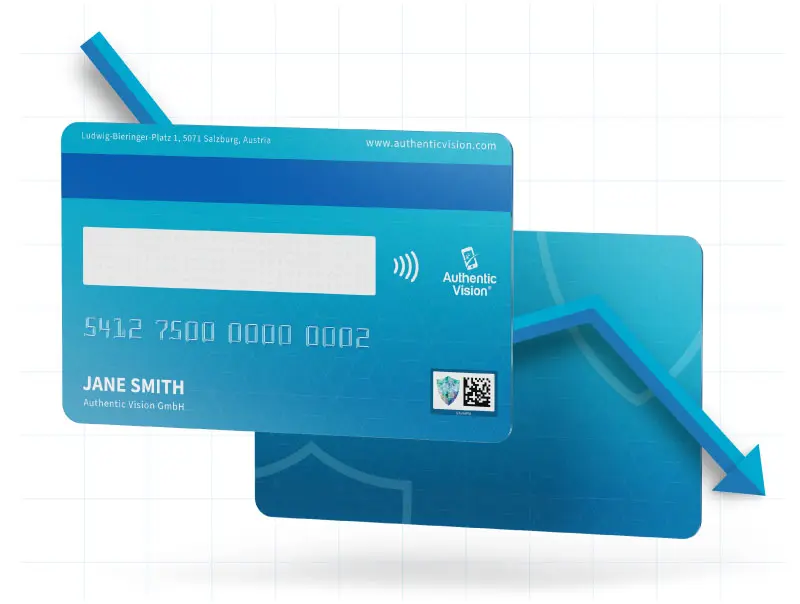
Connect a hard-to-copy physical security feature with convenient mobile verification without asking customers to carry a separate authentication device.
Banking reference
Trusted by UniCredit Bank Austria
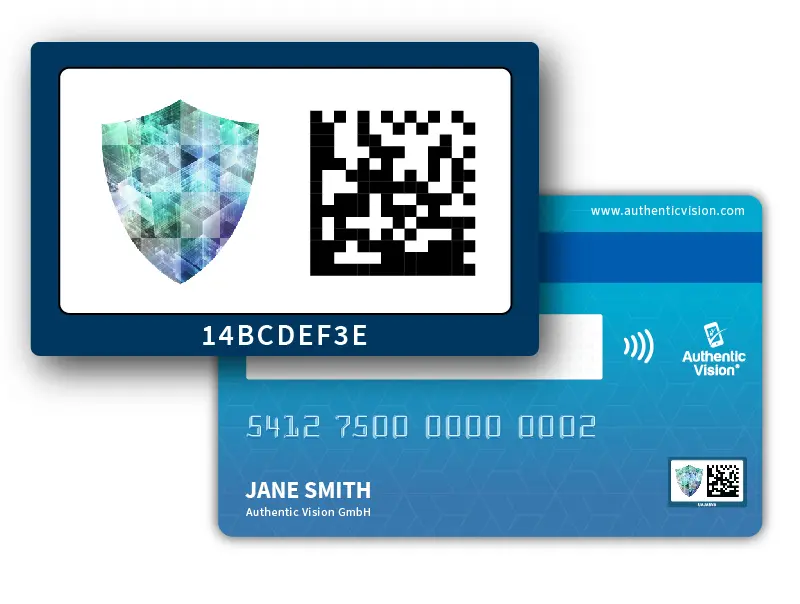
UniCredit Bank Austria introduced the Holographic Fingerprint™ in debit cards to strengthen mobile banking smartphone registration. Scanning the feature confirms the presence of the physical card when linking a banking app to a smartphone.

Applications across the customer journey
Banking Authentication Use Cases
One card-integrated security feature can support multiple journeys in mobile and online banking, subject to the bank’s authentication architecture and process design.
How it works
From a Physical Bank Card to Smartphone-Based Authentication
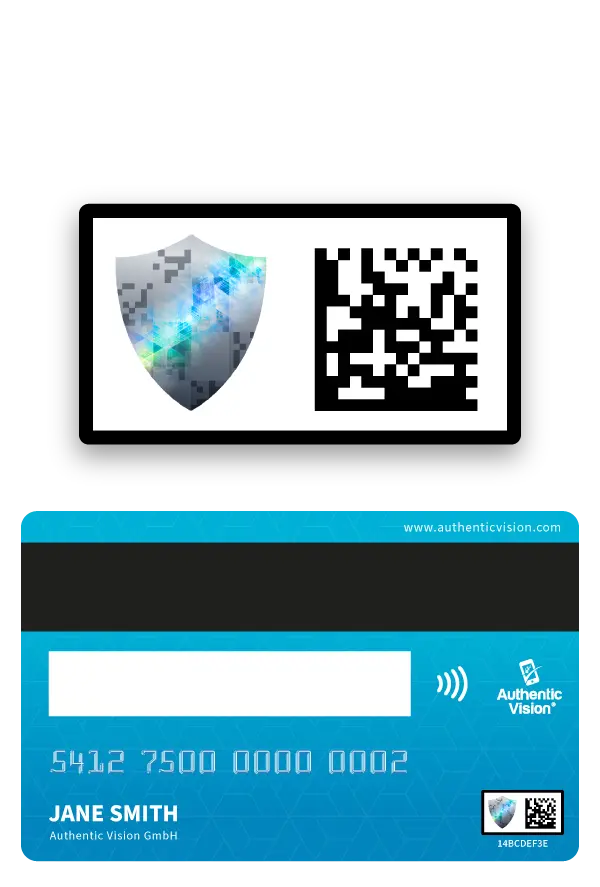
The Holographic Fingerprint™ is a unique, randomized physical security feature. It is registered during production and can be verified with a smartphone camera using Authentic Vision’s mobile authentication technology.
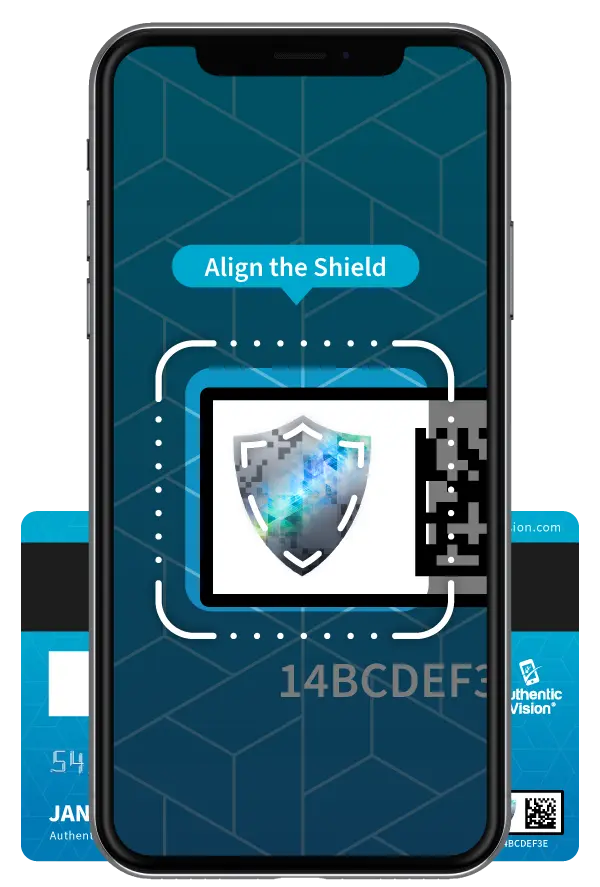
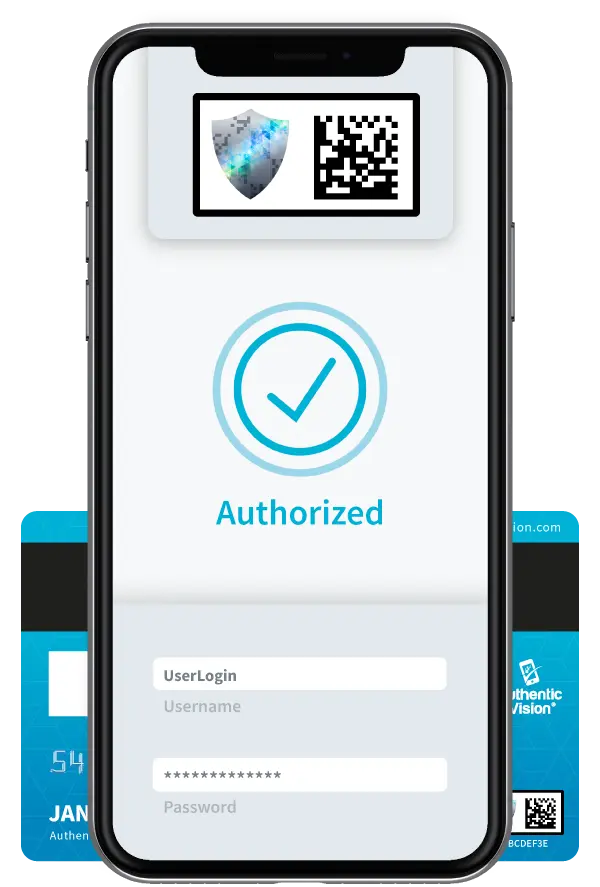
1. Integrate and Register
The thin holographic feature is integrated into the card. Its individual physical structure is enrolled during production and associated with the appropriate record.
2. Scan in the Banking App
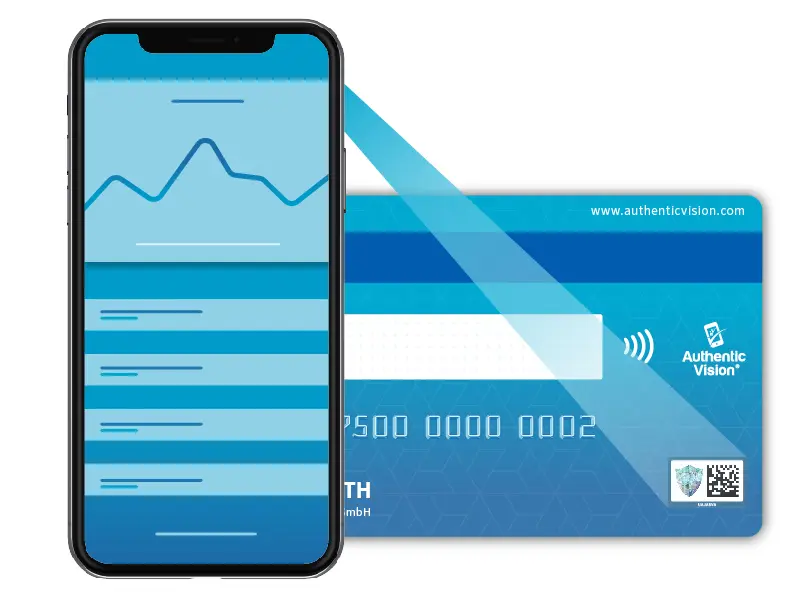
The customer scans the card with a compatible smartphone. The SDK captures the security feature and requests verification through Authentic Vision’s backend.
3. Verify and Authorize
The verification result can be used by the bank’s backend as an input to its own registration, authentication, activation or recovery workflow.
Why a QR Code Alone Is Not Enough:
A QR code or Data Matrix can carry an identifier, but it is the individual physical Holographic Fingerprint™ and server-side verification that support the anti-copying protection.
Designed for existing banking infrastructure
Bank Card Manufacturing and Mobile Banking Integration
Card Integration for Issuers and Manufacturers
The thin security feature is applied to a card layer using an automated application process and incorporated into the standard lamination workflow. The associated Data Matrix identifier can be read and mapped to card records as required.
- Application onto a card layer during production
- Standard card lamination process
- Enrollment and data mapping for verification workflows


Digital Integration with an iOS and Android SDK
Authentic Vision’s Mobile Authentication SDK can be incorporated into an existing banking app. The SDK communicates with Authentic Vision’s verification services, while the bank’s backend controls downstream actions such as device enrollment or account activation.
- Mobile scanning via supported iOS and Android devices
- Backend-to-backend integration for secure workflow decisions
- SDK and API documentation available to customers and partners
Security and regulatory context
Support for Strong Customer Authentication Strategies
Banks and payment service providers use multi-factor authentication to protect account access and payments. The Holographic Fingerprint™ can contribute an additional physical-card possession check to suitably designed processes.
Under European PSD2 strong customer authentication rules, meeting regulatory requirements depends on the full authentication design—including factor independence, enrollment, access controls and applicable exemptions. Authentic Vision’s technology should be assessed within each institution’s own compliance and security framework rather than treated as standalone proof of PSD2 compliance.
Data processing and privacy arrangements should likewise be reviewed for the specific implementation. The physical-feature scan does not inherently require collection of a customer’s name, email address or phone number, but banking systems may process other personal data as part of the wider journey.
